A city street or parking area
If possible, move out of the traffic stream and use hazard lights when the vehicle causes an obstruction. Do not stand between the vehicle and approaching traffic. If it is safely parked, note the street or car park entrance and any barrier. Do not continue driving with a fault that makes the journey unsafe.
Motorways and high-speed roads
Try to reach a service area or exit if possible. If you stop, follow the Highway Code’s motorway breakdown guidance. Get away from the vehicle and traffic only if you can do so safely. If you cannot reach safety or exit safely, remain belted, use hazards and call 999 for police. Do not attempt roadside repairs or place a warning triangle on a motorway.
Send a location that can be used
Give the road, direction and nearest junction on the M4 or a major A-road. A driver location sign reference or map position can help when available without risk. For a private car park, the vehicle entrance and level matter more than a nearby shopping landmark.
Choose the next useful destination
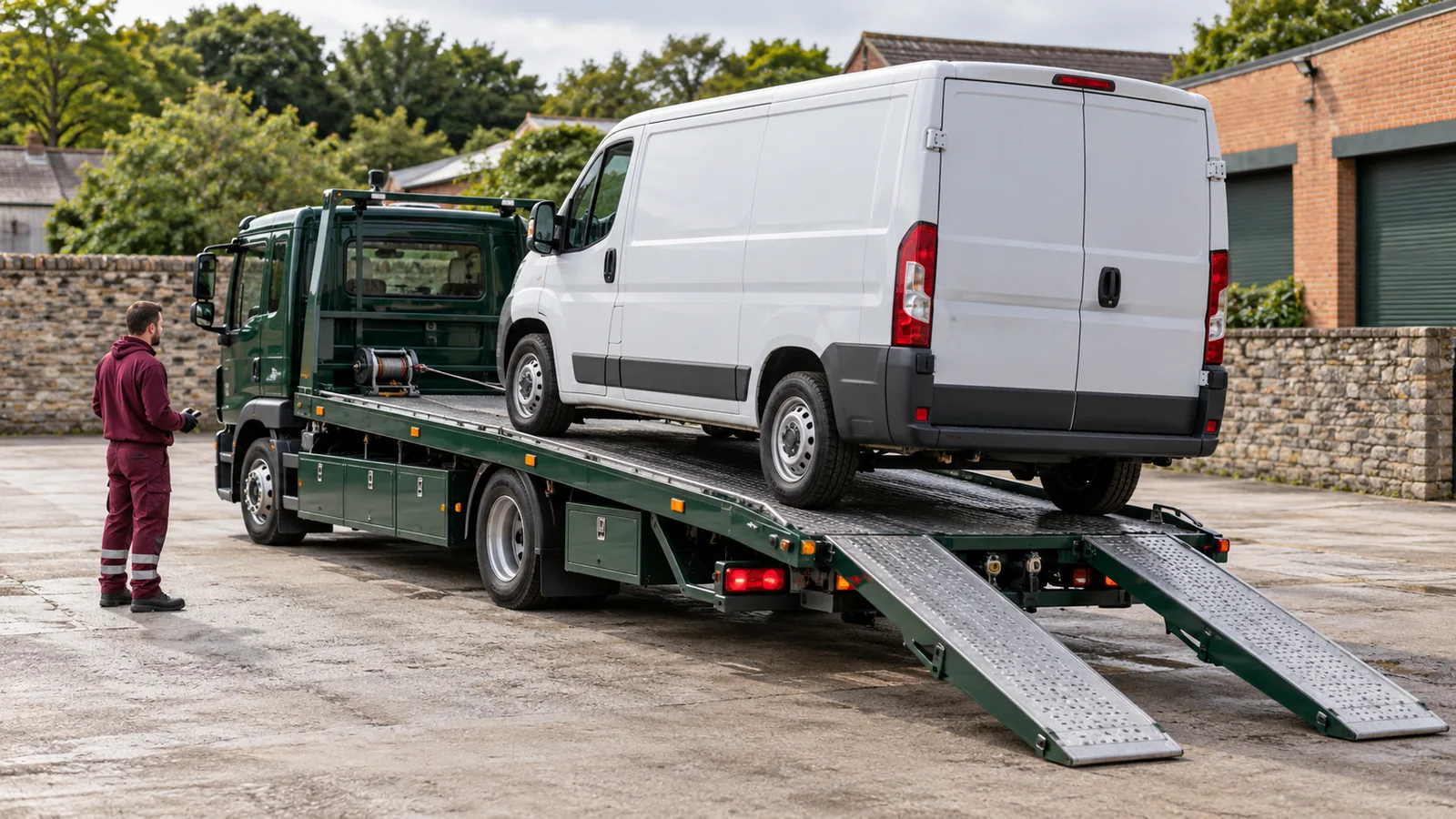
Tell the team what happened, the car or van model, wheel damage and passenger needs. If transport is required, provide the garage or delivery postcode and check someone can receive the vehicle. Explain whether police or traffic officers are already involved. Price, suitable equipment and arrival arrangements must be confirmed before you treat the recovery as booked.
Your questions, answered.
Should I call 999 for every breakdown?
Call 999 for immediate danger or emergencies, including being stranded in a live traffic lane. A routine breakdown in a safe place can be discussed with a recovery provider.
Does the car’s SOS button contact your recovery team?
No. A vehicle SOS or eCall system is for emergency services. Use the quote form for an ordinary recovery enquiry when safe.