
1. Identify the vehicle and the fault
Give the make, model and transmission type. Explain whether the problem followed a breakdown, long-term parking or a collision. Tell us if keys are available and whether the vehicle can be opened. For electric or hybrid vehicles, identify the exact model and any relevant warning or damage so the team can discuss suitable handling.
2. Explain movement and wheel condition
If the car does not run and drive, the key questions are whether it rolls, steers, selects neutral and releases its handbrake. Always report wheel or suspension damage, even if the engine starts. Answer from what you already know; do not experiment with a damaged vehicle or check it while exposed to passing traffic.
3. Check space at both addresses
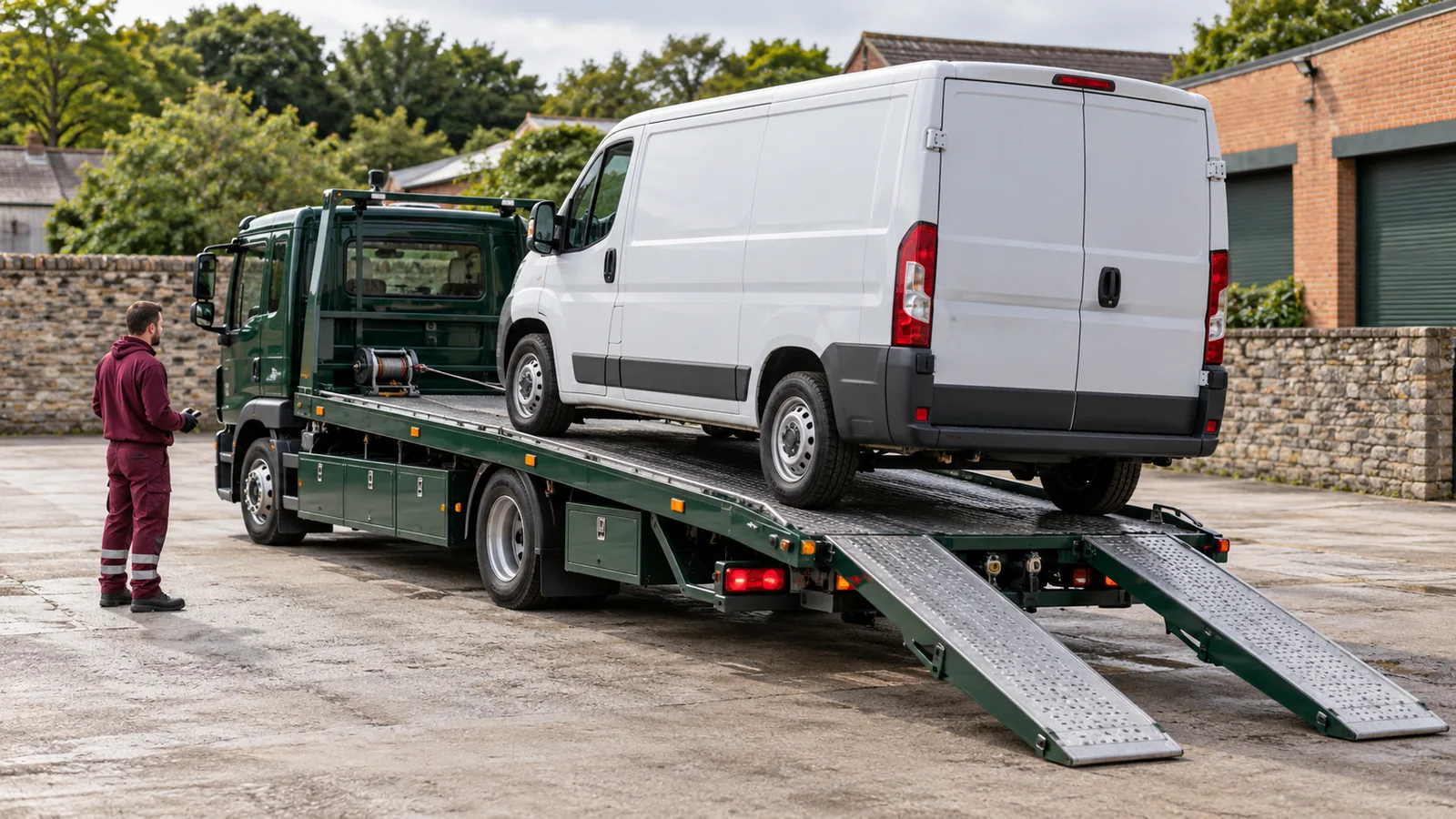
A recovery vehicle needs a practical position to load and unload. Give gates, height limits, slopes and tight turns at the collection. At delivery, confirm someone can receive the non-runner and that a garage has space for it. A car that can be winched onto a truck still needs a suitable unloading destination.
4. Get the arrangement confirmed
Send the pickup, delivery postcode and preferred date with those details. Any specialist equipment, access limitation and passenger requirement should be discussed before dispatch. A photograph may help explain the position or damage if requested; an image does not replace the vehicle assessment.
Your questions, answered.
Can a non-runner be moved without starting its engine?
Often it can, but the loading method depends on wheel movement, steering, transmission release, damage and access. The team must confirm a suitable arrangement.
What if I do not know whether neutral is possible?
Say that you do not know rather than guessing. Give the model, transmission and battery condition so the team can clarify what information is needed.