
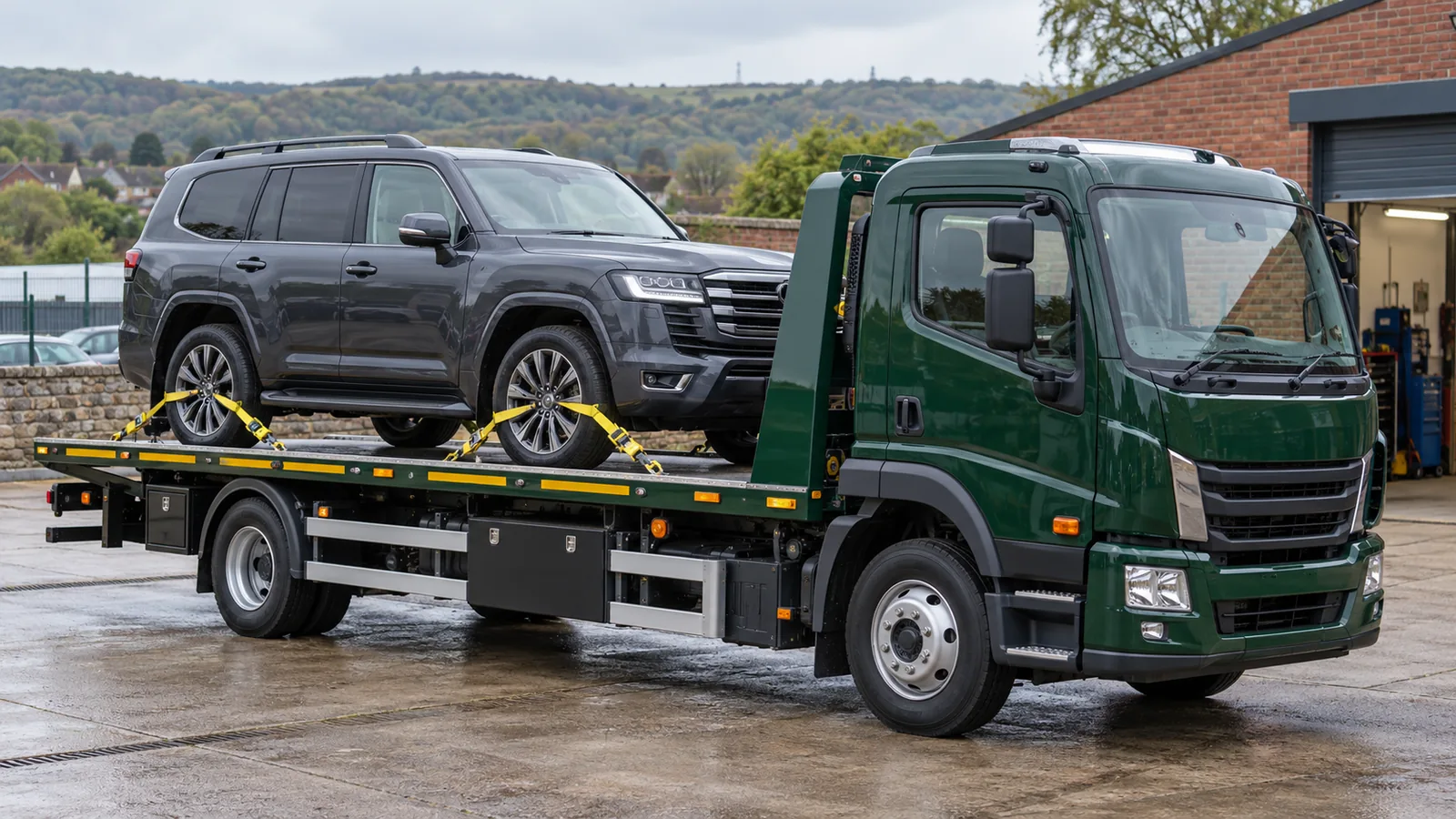
Give us the exact model and condition
SUVs vary considerably in size and weight. Send the make, model, transmission and whether the vehicle is electric, hybrid or conventionally powered. Mention any load, roof accessories, suspension modifications or unusual ground clearance. Truck capacity and a suitable recovery method must be checked rather than assumed from the description SUV.
Four-wheel drive requires appropriate handling
Manufacturer transport requirements can differ between models and drivetrains. Tell us whether the vehicle runs and drives for loading and report wheel, tyre, suspension or steering damage. If it does not move under its own power, the form asks about rolling, neutral and handbrake release. Do not attempt unfamiliar release procedures or move the vehicle in an unsafe position.
Plan the pickup and delivery access
A larger SUV on a sloping driveway or behind a low car park barrier may need additional planning. Give the exact location, height restrictions, slope, entrance and available space. At the destination, check garage opening hours, unloading space and who can receive the vehicle. Full pickup details and a drop-off address or postcode let the team assess the journey.
Get a quote for the actual work
Request a quote and add any fault, warning messages or known restrictions in your notes. We check equipment, route and availability before confirming the price and estimated collection arrangements. An enquiry alone does not dispatch a truck or confirm that a vehicle can be loaded.
Your questions, answered.
Can you recover an automatic or four-wheel-drive SUV?
Send the exact model and fault. The team checks suitable transport against the vehicle’s condition and manufacturer requirements before confirming the booking.
What if the SUV has locked wheels?
Report which wheels are locked and any damage or electronic parking-brake issues. Appropriate equipment and safe access must be assessed before accepting the collection.